How to Spot a Genuine Burberry Trench Coat vs. a Counterfeit
Learn how to identify a genuine Burberry trench coat with expert tips on fabric, buttons, check lining, and labels. Avoid counterfeit fakes with this authenticity guide.
How to Spot a Genuine Burberry Trench Coat vs. a Counterfeit
The Burberry trench coat is one of the most iconic garments in fashion history, but its popularity has made it a prime target for counterfeiters. With retail prices ranging from $2,000 to $2,600 for new Heritage models, and a strong resale market for both vintage and modern pieces, the demand for authentic items remains high. However, many replicas are convincing at first glance. This guide breaks down the key differences between a genuine Burberry trench coat and a counterfeit, focusing on the most reliable indicators: the gabardine fabric, buttons, check lining, labels, construction details, and vintage-specific markers.
The Gabardine Fabric: A Weather-Resistant Test
Authentic Burberry trench coats are made from tightly woven gabardine—historically cotton, now often a cotton blend. This fabric is engineered to be weather-resistant, meaning water should bead on the surface rather than soak in. Genuine gabardine has a dense, smooth texture with a fine diagonal twill visible up close. It feels dry, substantial, and holds structure, with a matte finish that lacks any sheen.
In contrast, counterfeit versions often use looser or coarser weaves, frequently incorporating poly-heavy blends. These fabrics tend to have a faint sheen or slippery hand, feel lighter and floppier, and may show uneven dye or pilling. Water will typically soak into the fabric instead of beading, which is a definitive red flag.
A light, floppy fabric with a faint sheen and poor water resistance is not genuine Burberry gabardine.
The Buttons: Crisp Engraving and Proper Material
Burberry trench coat buttons are a fixed specification and a highly reliable authentication point. Genuine buttons are made from horn-look resin, domed in shape, and feature crisp engraving of "BURBERRY" and often "LONDON" or the founding year in the house serif font. The engraving is evenly filled and sharp, and the buttons are attached with a shank and sewn tightly using a cross or parallel stitch in matching thread. Heavier buttons also have a wrapped thread shank.
Counterfeit buttons often appear flat with plastic finishes, shallow or blobby engraving, incorrect typefaces, or loose attachment. They may also lack the correct number of buttons for the specific cut (e.g., Kensington, Chelsea, Waterloo). Buckles on fake coats are typically lightweight, roughly cast, and may have soft or missing stamps.
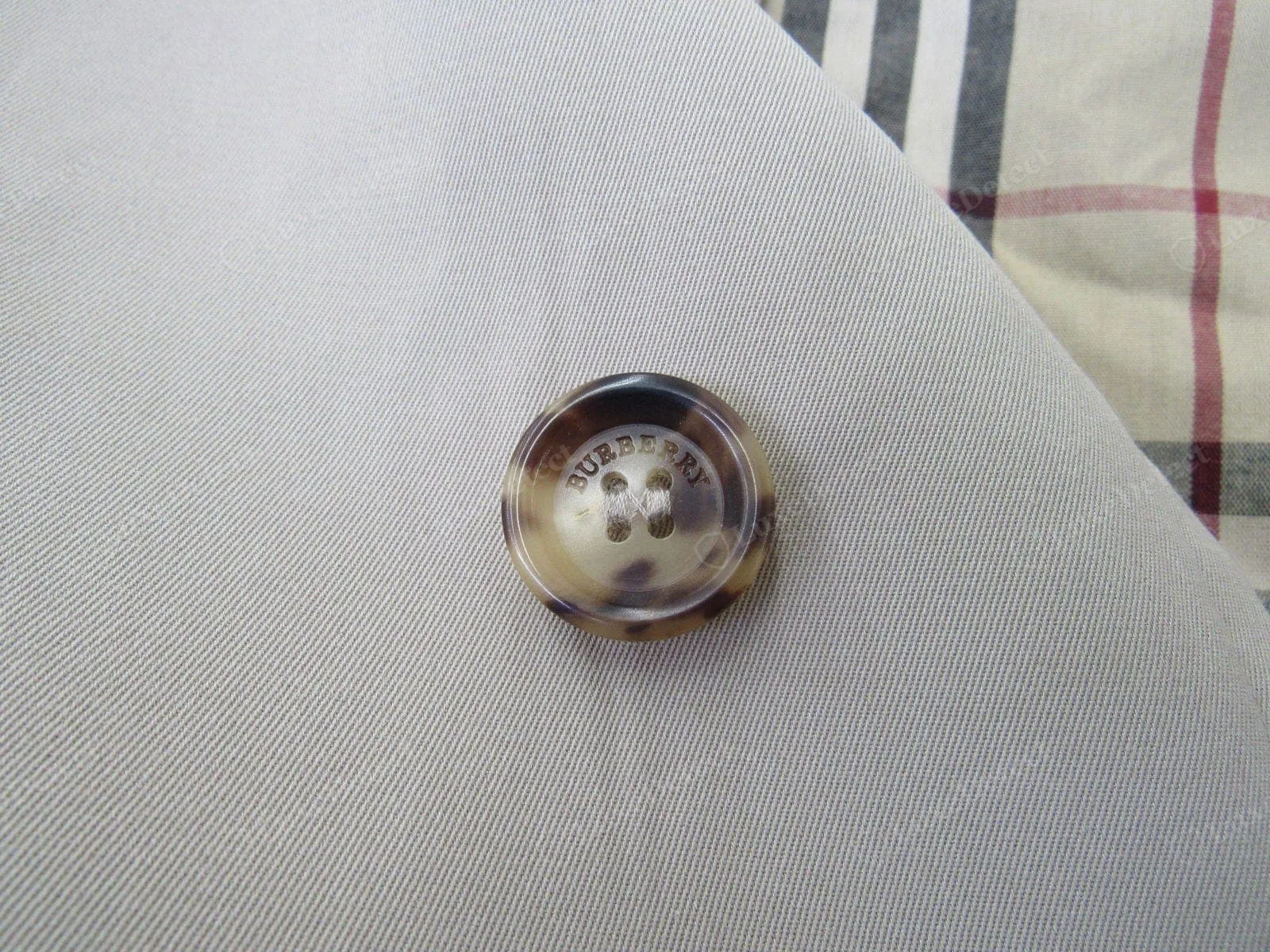
Flat plastic buttons with shallow engraving are a clear sign of a fake.
The Check Lining: Woven, Not Printed
One of the most telling signs of authenticity is the check lining. Authentic Burberry trench coats feature a woven check pattern—either the Vintage Check or House Check—depending on the era. When you turn the lining over, the pattern should still be visible (though fainter) on the reverse side, and you should be able to feel the weave structure. The proportions are exact: stripe widths, spacing, and the thin red line are all consistent with Burberry’s fixed geometry. The check is aligned at the center back seam and matched across shoulder seams and where the lining meets the facing.
Fake linings are often printed, meaning there is no pattern on the reverse side and no discernible weave. They may also have slightly off proportions, mismatched patterns at seams, or colors that are too bright or dull. A printed check lining is a definitive indicator of a counterfeit.
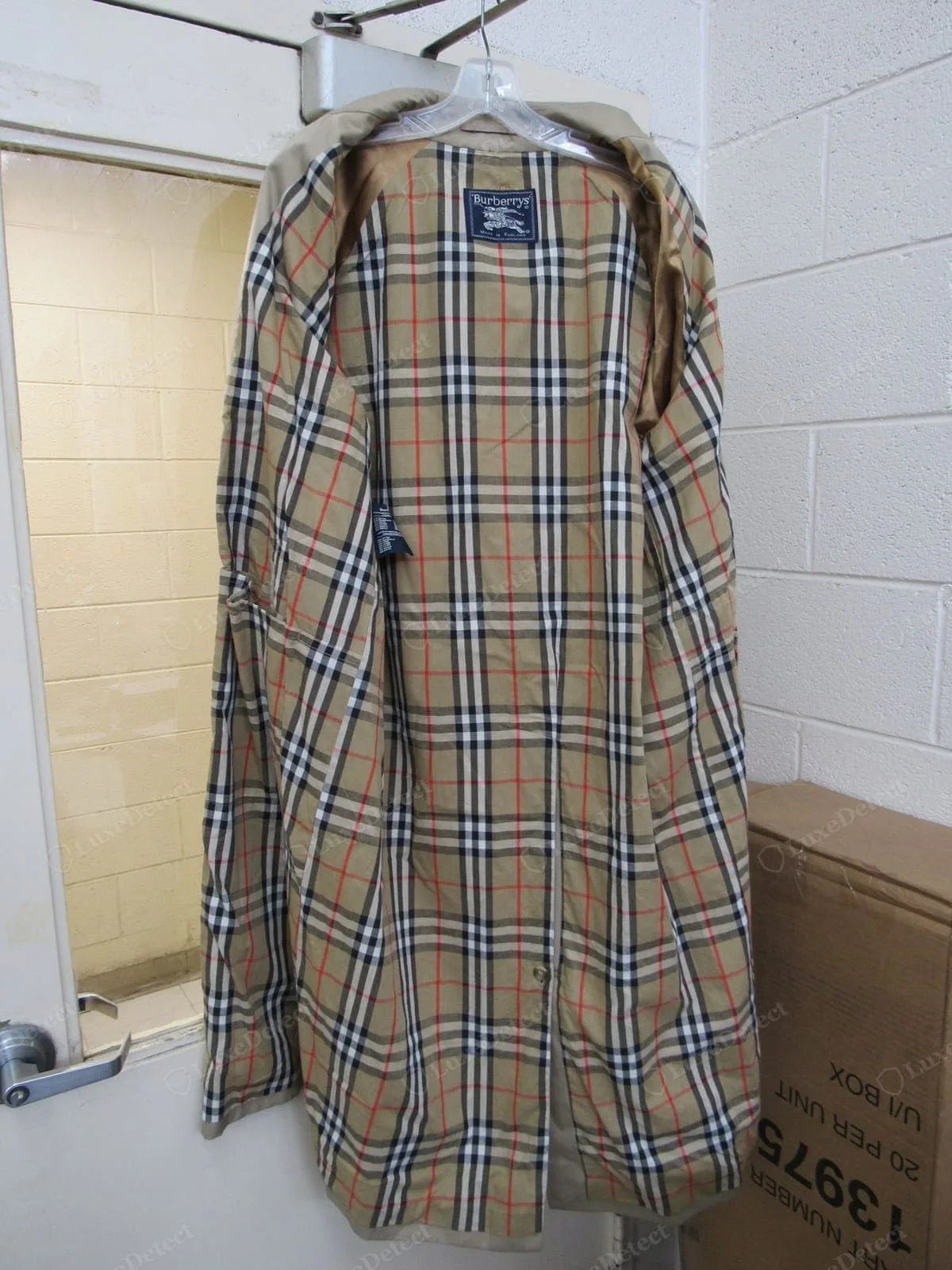
A flat printed check with no reverse pattern is a sure sign of a fake.
The Labels: Woven, Correct Logo, Valid RN Number
Authentic Burberry trench coats have a densely woven main label at the neck, featuring the current house logo for the era—either the Equestrian Knight Device on older and Heritage pieces or the wordmark on newer ones. The lettering is sharp with clean edges, and the label is sewn in flat with even stitching and no puckering.
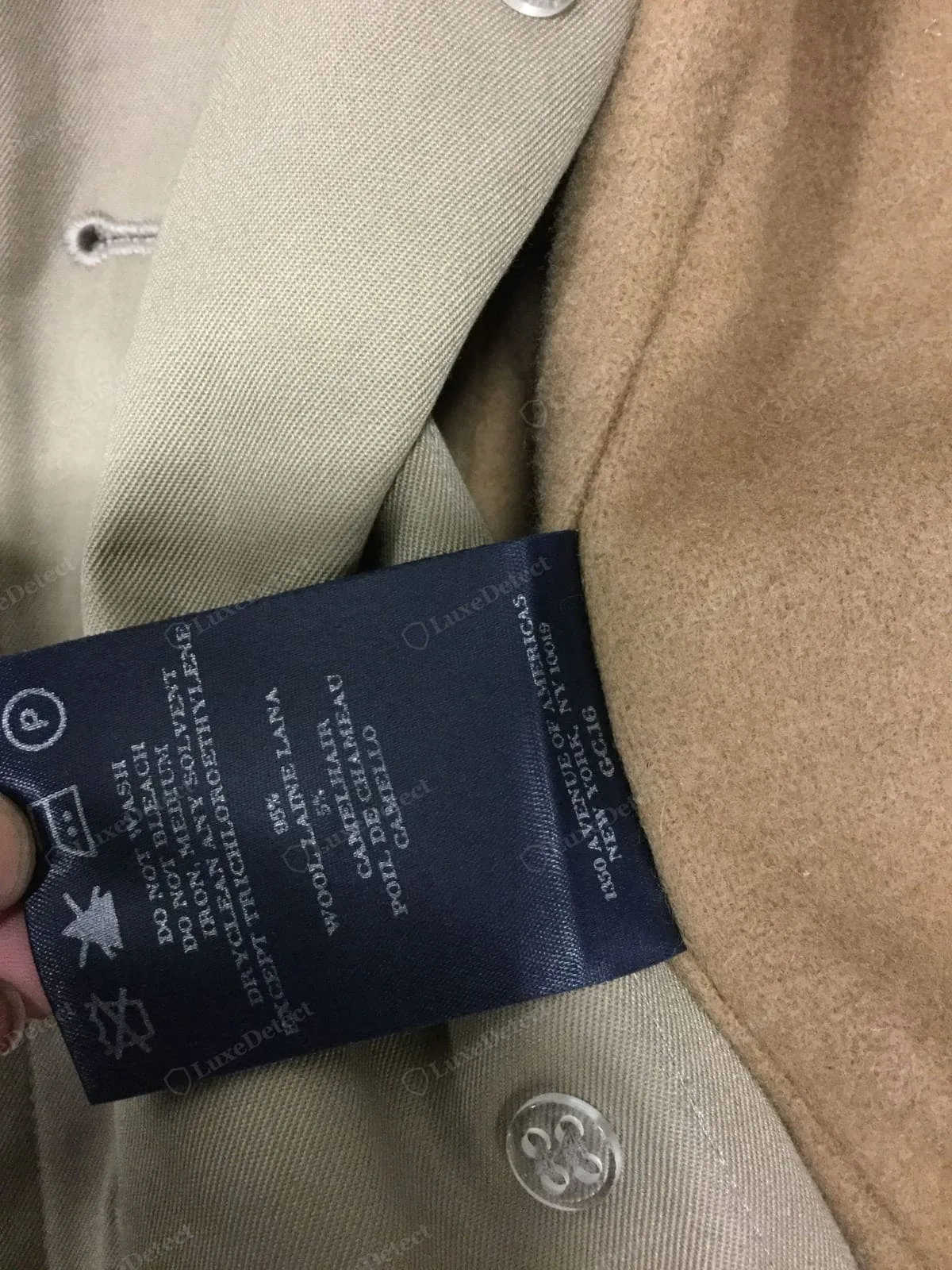
Care labels in the side seam provide fibre content, care symbols, country of manufacture, and an RN (registered identification) number. This number can be verified through the US FTC database. The style/size label includes a style code and size in the format used during the coat’s production period.
Fakes often have printed or crudely woven labels, wrong logos for the claimed era, fuzzy Knight Devices, spelling errors, impossible care symbols, missing or invalid RN numbers, or countries of origin that Burberry does not use for outerwear.
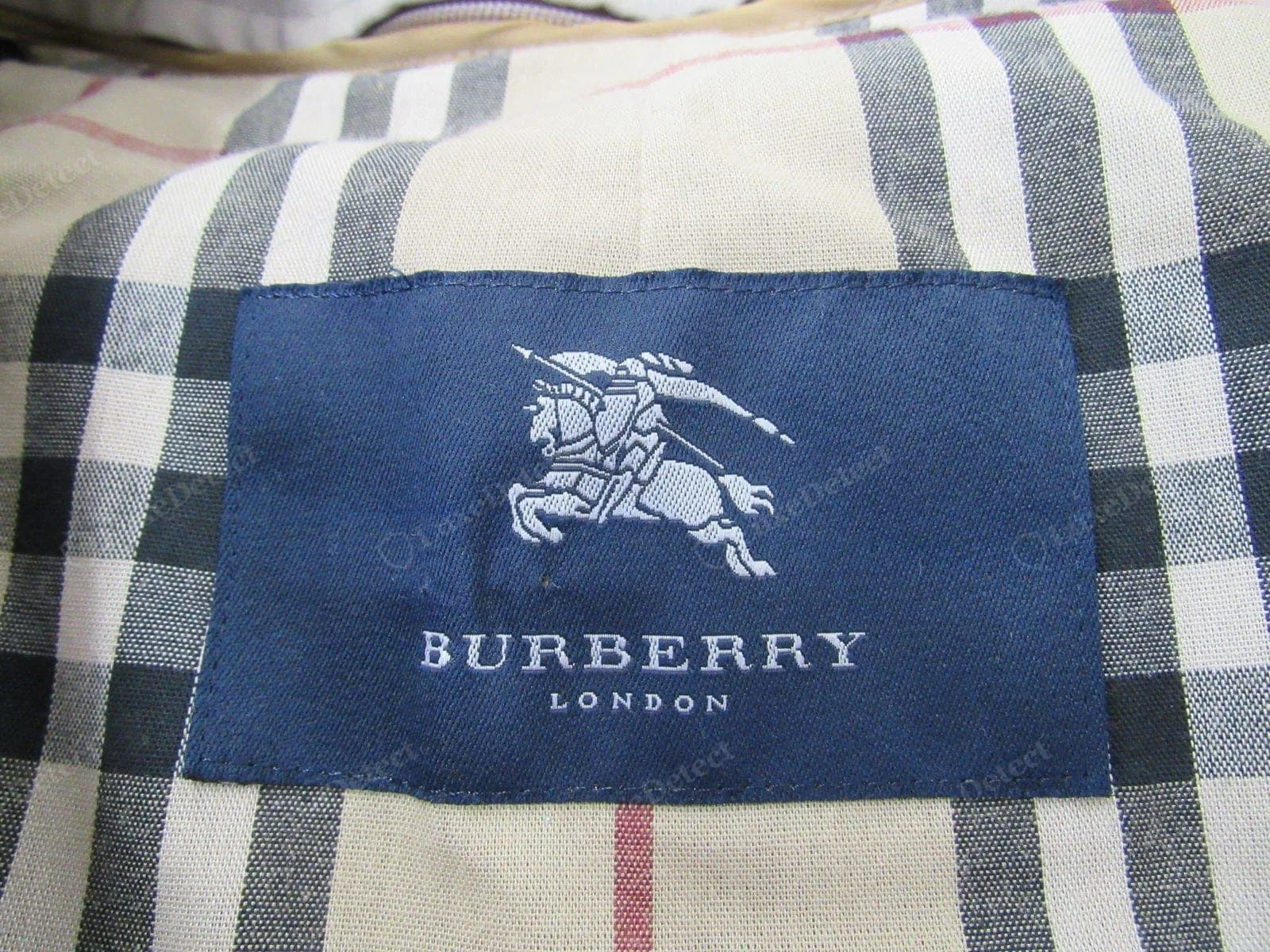
A printed label or incorrect logo is a major red flag.
Construction and Details: Precision Matters
Burberry outerwear is known for its high construction standards. On a genuine coat, the storm flap (the extra layer across the right chest) is fully stitched down and sits flat. The gun flap, epaulettes, throat latch, belt loops, and D-rings are all present and cleanly attached for the specific cut. Seams are flat-felled or bound, straight, and have consistent stitch length. The collar rolls cleanly, and the under-collar is a melton or self-fabric with a tidy edge. The hem is even, and the vent is clean.
Fakes often miss these details—missing D-rings, no throat latch, wrong epaulette shape, raw or overlocked seam allowances, wandering topstitching, uneven hems, or collars that won’t sit properly. These flaws are especially common in lower-quality replicas.
Fit, Proportion, and Weight: The Overall Silhouette
A genuine Heritage trench has a specific silhouette: the Kensington is slim and long, the Chelsea slightly slimmer and shorter, and the Waterloo relaxed. The shoulders are structured but not stiff, and the sleeve head is clean. The coat hangs with the weight of real gabardine.
Fakes often hang lifelessly due to inferior fabric. Shoulders may collapse or be over-padded, and overall measurements may deviate from Burberry’s specifications. A coat that drapes poorly or feels flimsy is likely counterfeit.
Vintage-Specific Notes: "Burberrys" vs "Burberry"
Vintage Burberry coats (pre-late 1990s) are labeled "Burberrys" (with an S), while later pieces use "Burberry." This distinction helps date the coat. Older pieces often feature 100% cotton gabardine with a denser hand, real horn buttons on some models, and earlier Haymarket check proportions. A modern logo on a coat sold as 1980s vintage—or an old "Burberrys" label on a recent piece—is a red flag.
Quick Authentication Checklist
To quickly verify authenticity:
- **Feel the gabardine**: Dense, dry, matte, with water beading.
- **Examine the buttons**: Domed, horn-look resin, crisp engraving, shank-sewn.
- **Check the lining**: Woven, pattern visible on reverse, correct proportions, matched at seams.
- **Inspect the labels**: Woven main label, correct logo for era, valid RN number.
- **Verify construction**: Storm flap, D-rings, flat-felled seams, clean collar roll.
- **Assess fit and drape**: Structured shoulders, proper weight, correct measurements.
For vintage pieces, ensure the label name matches the claimed era.
Two or more failures mean the coat is likely counterfeit. A printed check lining or fabric that fails the water test alone is sufficient to rule out authenticity.
When to Get a Professional Opinion
While many fakes are obvious from the cloth alone, high-quality replicas can be challenging. These may use decent cotton-blend gabardine, close button engravings, and woven (though slightly off) checks. Distinguishing them requires expertise in subtle details like exact stripe geometry, button engraving under magnification, label weave density, and RN-number verification.
If buying online or dealing with vintage pieces without paperwork, consider getting a professional authentication. Services like LuxeDetect offer verification within 24 hours for a fee, requiring photos of the button close-up, check lining front and reverse, main label, and care/RN labels.
For additional guidance on luxury item authentication, see our How to Spot a Genuine Louis Vuitton Monogram Bag vs. a Counterfeit or How to Authenticate a Moncler Down Jacket: Key Signs of Authenticity.
Frequently Asked Questions
What is the fastest way to spot a fake Burberry trench?
The check lining and the fabric. A genuine Burberry check is woven—visible on the reverse and with a tactile weave—while many fakes use a flat printed check. Also, genuine gabardine is weather-resistant; water beads on it, whereas counterfeit fabric soaks it up.
What do the buttons on a real Burberry trench look like?
They are domed, made of horn-look resin, with "BURBERRY" and usually "LONDON" engraved crisply in the house serif font. They are attached with a shank and sewn tightly with a cross or parallel stitch. Flat plastic buttons with shallow or wrong-font engraving are a telltale sign of a fake.
What is the difference between "Burberrys" and "Burberry" on the label?
"Burberrys" (with an S) was used until the late 1990s, so a coat labeled "Burberrys" is genuine vintage. "Burberry London" and the current wordmark are used later. A modern logo on a coat sold as 1980s vintage—or an old "Burberrys" label on a recent piece—is a red flag.
Does a real Burberry trench have an RN number?
Yes. The care label includes an RN (registered identification) number, which can be verified through the US FTC database. A missing or invalid RN number is a strong indicator of a counterfeit.
Can I trust the price as a sign of authenticity?
Not always. While extremely low prices are suspicious, some genuine pre-owned coats sell below retail. Conversely, some fakes are priced high to appear legitimate. Always inspect the physical details before relying on price alone.
Is there a public Burberry serial number checker?
No. Burberry does not offer a public online tool to verify serial numbers. Use any code found as supporting evidence, but never rely on it alone. Always conduct a full inspection of the item.